
When a bunker becomes a museum
Art Venues Collection – II
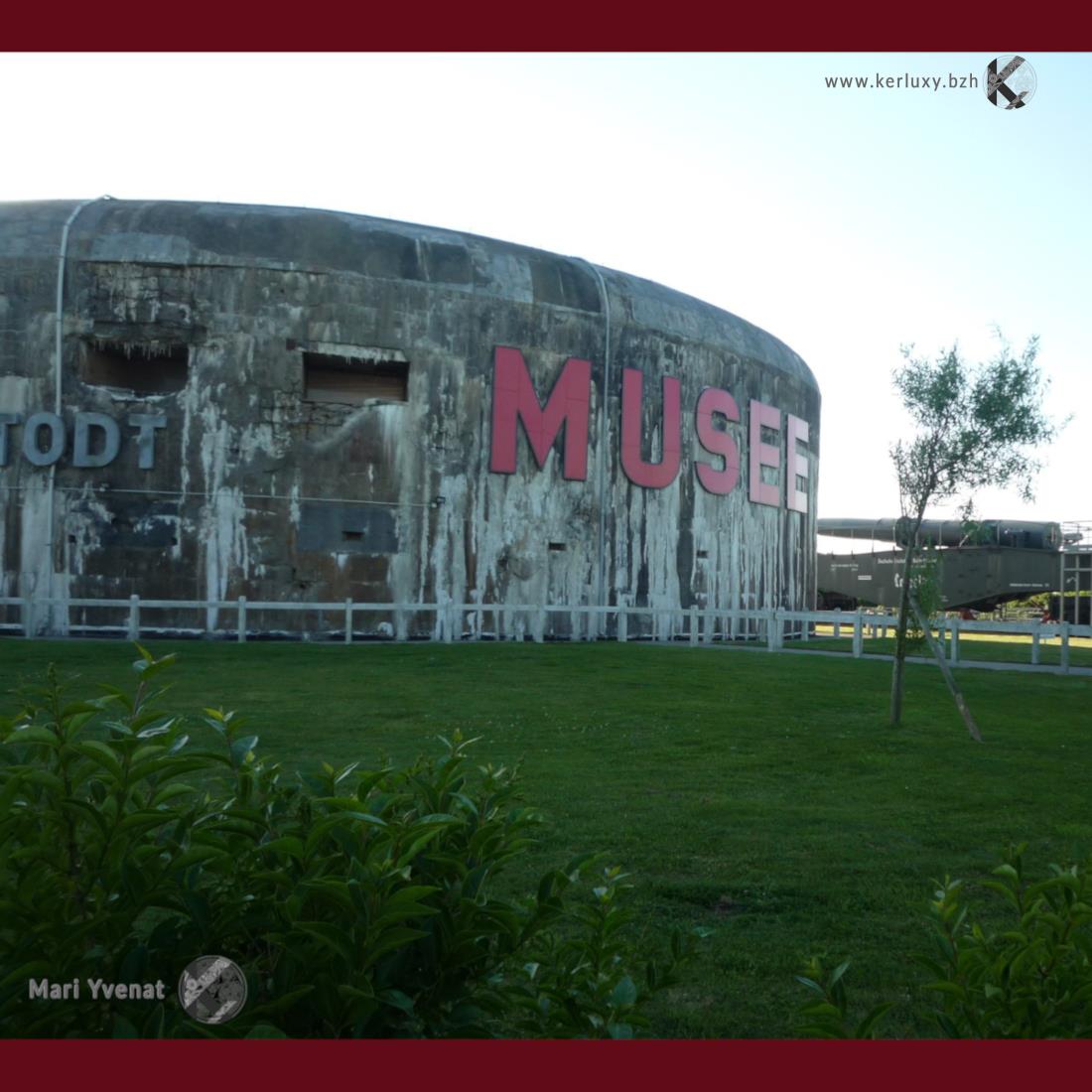
The Atlantic Wall Museum, housed in a bunker.
There are some architectural structures whose primary function seems to preclude any other purpose. The Todt Battery bunker in Audinghen, ner Cap Gris-Nez in France, is a striking example.
On its concrete façade, a word painted in monumental red letters: MUSEUM. An almost disconcerting inscription, so powerfully does the building retain the imposing presence of its former self. Here, there is no need to imagine the past: it is embodied in the very fabric of the walls.
Built by the German army during the Second World War, the Todt Battery was designed to defend the coastline of the Strait of Dover and control maritime traffic in this strategic area. Its four concrete casemates housed powerful naval guns. Today, one of them houses the Atlantic Wall Museum.
Outside, another monumental relic catches the eye: a German K5 280 mm cannon, designed for railway use.
The site has lost none of its scale or starkness. It doesn’t try to erase its past; it preserves its traces and transmits its history.
After the light-filled greenhouse of the Orangery in the André-Citroën Park, the Todt Battery presents a completely different face. Two architectural styles, two purposes, two relationships to time. One houses contemporary artworks under glass, the other preserves the traces of a bygone era beneath its concrete.
This is the second installment in our Art Places Collection: places whose architecture already tells a story, even before you enter.
Mari Yvenat